 Watt2Ride
How long does an e-bike battery really last?
January 12, 2026
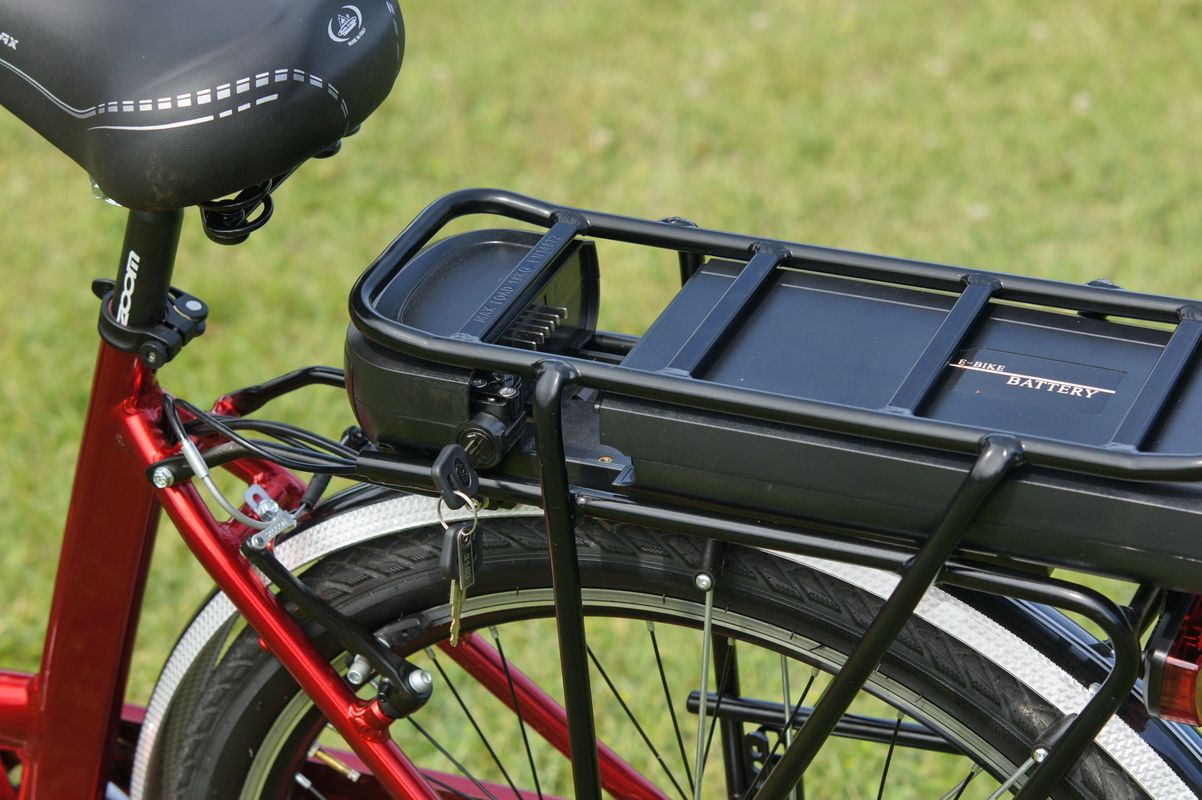
There's one question that follows every e-bike rider out the door: how far will the battery actually get me today? The manual is very clear about it: 80 km. Then you head out, do your usual loop, and somewhere around the thirty-kilometre mark you catch yourself staring at the display while the last bar blinks back at you. Infuriating, right? And be honest, who hasn't at least once crawled home with the assistance switched off, legs burning, trying to save the last few drops for the final hill?
In moments like that it's tempting to blame the bike, the shop that sold it to you, or whoever printed that number in the manual. But the answer isn't to get angry and give up on the whole thing. It's to understand a bit better how your e-bike's electrical system works, what asks the most energy of it, and how to manage it well. You don't need an engineering degree, we promise: a few basics and a little attention on your first rides are enough. The rest comes naturally, and those mid-ride surprises become a thing of the past.
Why the number in the manual never adds up
Let's start with that famous "80 km". It isn't a lie, but it isn't a promise either. That figure is measured under conditions that almost never exist in real life: perfectly flat roads, no wind, mild temperatures, a rider of average weight with no luggage, and the assistance on its lowest setting the whole time. In other words, it's the bike on its very best day, in an ideal world. The moment you leave the house and add a hill, a backpack or a bit of a hurry, that number inevitably starts to shrink.
The biggest culprit by far is elevation. Hauling yourself, the bike and everything you've loaded onto it up a hill takes a surprising amount of energy. Two 50 km rides can look identical on paper, but if one is flat and the other has 800 metres of climbing, they're two different worlds as far as the battery is concerned: the second can easily use two or three times as much. And sadly, the descent gives you almost nothing back. On most e-bikes, what you spend going up doesn't return on the way down: you get your breath back, you enjoy the view, but the charge stays exactly where it is. Anyone who rides in the hills learns this quickly, usually halfway round a hairpin.
Then there's everything you bring along. Panniers, a heavy lock, a change of clothes for the office, the weekly shop, maybe a child in the seat or in a trailer. Every extra kilo counts, and it counts most when the road tilts upwards. That's not a reason to travel light at all costs, quite the opposite: using your bike for everyday life is exactly what makes owning one so good. It's simply a good reason not to be surprised when the same route, ridden with full bags, gets you noticeably less far than your usual Tuesday morning commute.
Cold and wind, the enemies you can't see
Hills and luggage are easy to picture, but there are two factors that catch almost everyone off guard. The first is the cold. Lithium batteries are a bit like us: in low temperatures they get sluggish, slow down and struggle to give their best. In winter it's completely normal to lose 20-30% of your usable range, even if you ride exactly the way you did in spring on exactly the same route. It isn't a fault with your battery and it doesn't mean it's wearing out: it's just chemistry doing its thing. One small trick makes a real difference: keep the battery indoors, somewhere warm, and only clip it onto the bike when you're ready to leave. It starts the ride already warm, and thanks you with a few extra kilometres.
The second invisible enemy is the wind, the thing nobody thinks about until it's blowing straight in their face. For the motor, a good headwind is like a climb as long as the whole road: you can't see it, but you pay for it all the way. The classic case is the out-and-back ride. On the way out the wind is behind you, you feel like you're flying, the battery barely moves and you start thinking you could go anywhere today. Then you turn around to head home and discover the bill was only postponed. If you know it's going to be windy, factor it in before you set off: it's much better to have the headwind on the way out, when the battery is full, than on the way back, when there's little left.
Assistance level, your secret weapon
Hills, weight, cold, wind: these are mostly things that happen to you. But there's one lever that's always in your hands, and it's also the most powerful of all: the assistance level. Riding in eco instead of turbo can easily double the distance you get from a single charge. No bigger battery will give you a result like that, and this one is free.
That doesn't mean crawling along at the minimum setting and arriving at the office drenched in sweat. The idea is to use turbo wisely: save it for when you really need it, like the steep ramp outside your house, pulling away from the lights with a loaded cargo bike, or the last kick before the village, and let your legs do a little more of the work when the road is flat and smooth. Keeping a light, quick cadence instead of grinding big gears also helps the motor work more efficiently and use less energy. At first it'll feel like there's a lot to think about, but after a couple of weeks it becomes second nature, a bit like changing gear in a car without even noticing.
So, how far will you really get?
Now for the million-dollar question. A rule of thumb that works well is this: take the rated range and treat 50-70% of that number as realistic, on real roads with real hills. If your bike promises 80 km, plan your day around 40-55 km between charges. A bit more if the ride is flat and the weather is warm, a bit less if there's a lot of climbing, you're carrying a load, or it's January. That said, the most reliable method of all is getting to know your own bike. Notice how many bars your usual loop costs you, how much that changes when the wind picks up or when you head out early on a cold morning. After a few rides you'll have a feel for it that's far more accurate than any table (this one included, we admit).
At this point it's natural to think the ultimate solution is simply to buy a bigger battery. It helps, of course, but it's heavy, it's expensive, and sooner or later it runs out too. What really changes a day in the saddle is knowing where you can stop to charge along the way. And here's the good news: you don't need a full charge. Half an hour or an hour plugged in at a café, a farm stay or a campsite is often enough to cover the stretch that's left to get home. In fact, let's be honest: a charging stop is also a perfect excuse for a coffee, a slice of cake, or a wander round the village you'd otherwise have ridden straight through without a second glance.
That's exactly why we started building Watt2Ride. We wanted a map of the places where you can actually plug in along the route, not just the official charging stations, so you can plan a ride around your real range rather than the one printed on the box. And if despite all this you still find yourself with one bar left five kilometres from home, at least now you know who to blame. Probably the wind.