 Watt2Ride
Doing the grocery run by e-bike actually works, and it changes your week
October 6, 2026
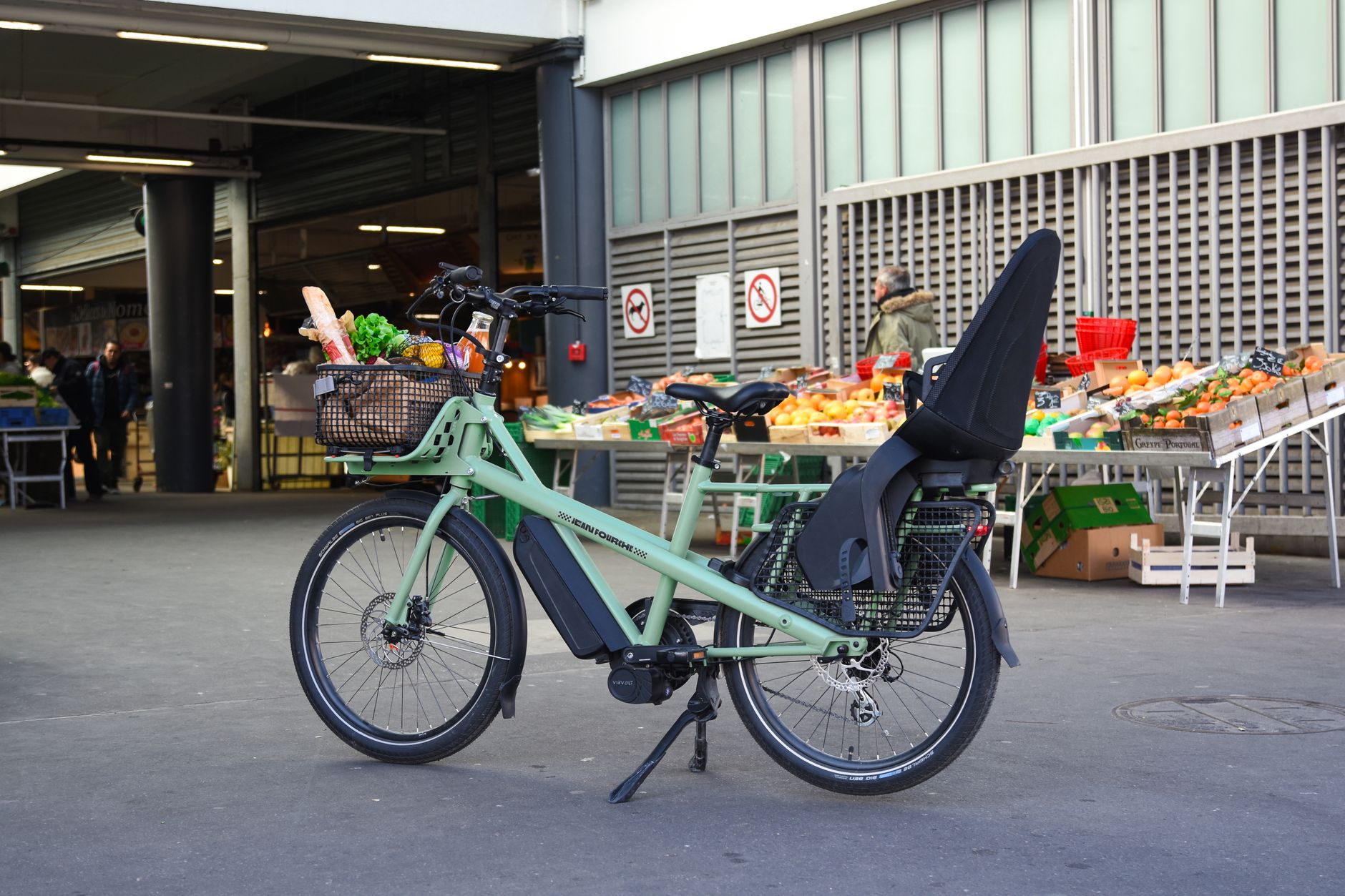
There's a ritual that repeats itself every week in almost every household, list scribbled in a hurry on the back of a receipt, trolley that at some point simply won't close anymore. And there's a question anyone who rides an e-bike asks themselves sooner or later, usually while eyeing the car parked outside the supermarket with the checkout queue barely moving: is it really worth doing the shop by bike, or is it just easier to hop in the car and get it over with? It isn't a trivial question, because unlike a ride for pleasure, the grocery run comes with a load, a schedule to keep, and the near certainty that something will eventually slide out of a badly tied bag. And yet, with a few small adjustments, it's one of the best ways to fold an e-bike into everyday life, not just into sunny weekends.
People who've been doing it for a while all describe the same feeling: parking simply stops being a problem, because the bike locks up wherever you want and you're inside the shop in two minutes instead of circling the block three times for a space. And the half hour that used to get swallowed up between driving there, hunting for parking, queueing at the till and driving back often shrinks rather than grows, especially in neighbourhoods where late-afternoon traffic eats up whatever advantage the car had in the first place. In this piece we'll look at how to organise a grocery run by e-bike without the bags splitting halfway home, which small habits genuinely change things, and where, in the end, the Watt2Ride map can lend a hand too.
The load matters more than the distance
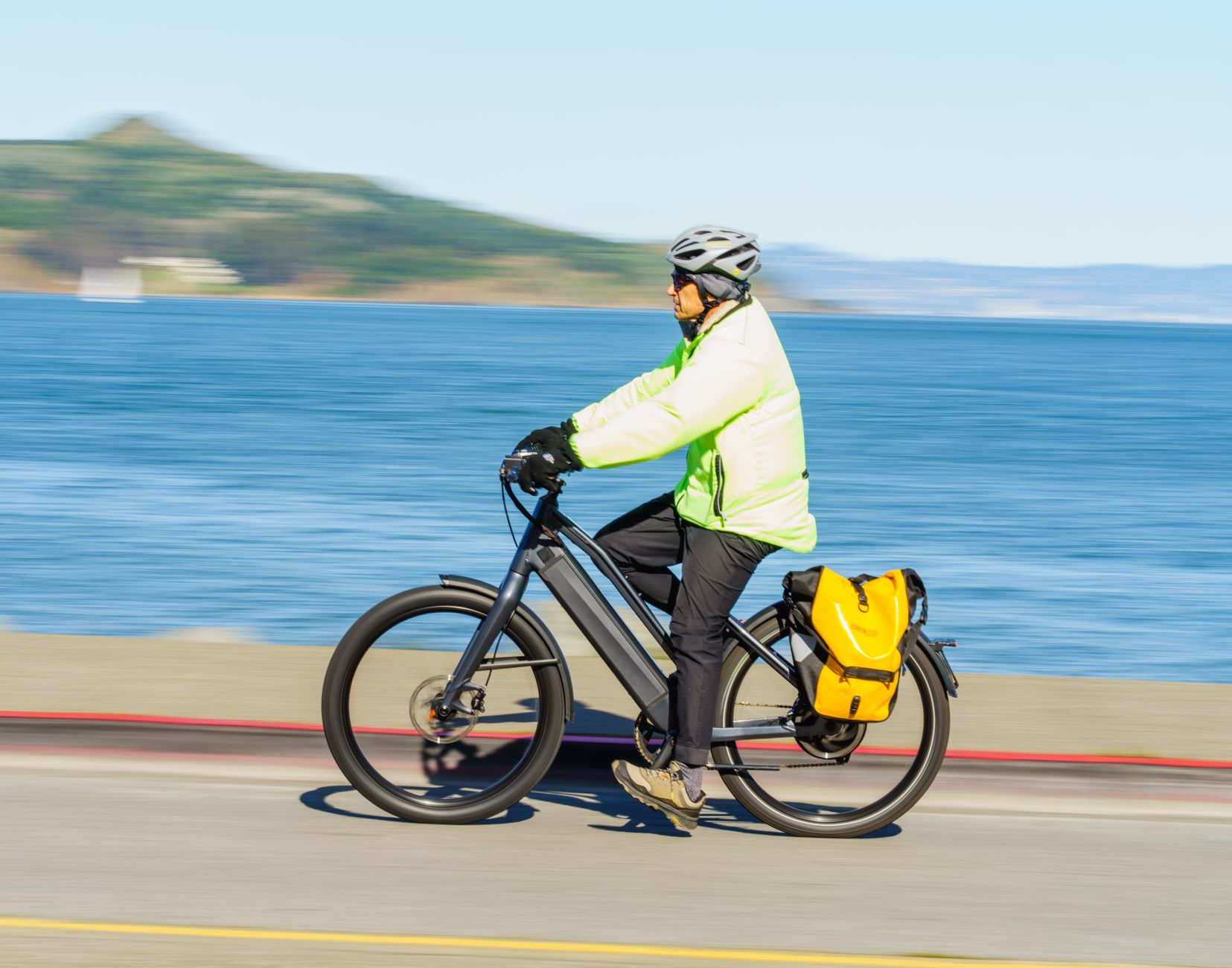
The first thing to understand is that for the grocery run, how you load the bike matters far more than how far you pedal. Two shopping bags dangling off an ordinary handlebar, swinging with every pothole, are the perfect recipe for arriving home with spilled yoghurt and a sore back from fighting to keep balance. Proper panniers, the kind that clip onto a rear rack, change everything: the weight drops low and sits either side of the wheel, the bike stays stable even with a full week's shop on board, and you can ride as if there were nothing back there at all. Anyone doing a big shop regularly, for a family say, often finds the real step up isn't the panniers but the bike itself: a cargo bike, with a front box or an extended rear frame, comfortably carries what a small car fits in its boot, water crates included.
Route choice matters more than it sounds too, and this is where the grocery run really differs from a ride for fun. There's no point chasing the scenic road if it means tackling a climb with ten kilos of shopping on the rack: a route that's a touch longer but flat, ideally on a cycle path separated from traffic where you don't also have to deal with being overtaken by a car while your bags sway, is the better call almost every time. And if the supermarket you use is further than your battery comfortably handles there and back with a full load, it's worth checking whether there's a charging point nearby you can rely on if something goes wrong. Not because you'll need it every single time, but because knowing it's there, ready, takes away one of the few worries the grocery run by bike still carries.
A habit, not an event
The second shift, and often the one that makes the real difference over time, is stopping thinking of the grocery run as one big weekly expedition and starting to treat it as a small errand folded into a ride you were taking anyway. Anyone who rides an e-bike to work, for instance, often finds that stopping for ten minutes on the way home to pick up what's missing for dinner costs very little extra compared to the ride they'd be making regardless, while in a car that same detour means leaving the house again specifically for it, with everything that implies in lost time and motivation. Splitting the shop into smaller, more frequent trips instead of one huge haul once a week also makes the weight far easier to manage: two light bags most days weigh less, on your back and on the battery, than a month's worth of shopping loaded all at once onto a bike that probably wasn't built for that kind of use.
There's also a less practical, more enjoyable side to this change of habit, one that's hard to picture for anyone who only ever drives until they actually try it. Riding for errands makes you notice things you simply can't see from behind a windscreen: the bakery that's just pulled fresh bread out of the oven, the Saturday market that's moved one street over, the greengrocer you didn't even know existed because it's on a road you never take by car. That's not a small detail. Plenty of people who start doing their grocery run by e-bike out of necessity, maybe because they've given up the car or are just trying to save on petrol, end up saying that after a few months it became the habit they prefer, not the one they settled for. And in winter, when the days get shorter and the cold bites, dressing properly and picking the times with more daylight is usually enough: not an obstacle, just something to plan with a little more care.
Where the map can lend a hand
Anyone doing their grocery run by e-bike regularly, especially on a cargo bike carrying heavy loads and therefore using more charge, can occasionally find themselves wanting a charging point near the shops they use most, not for every ride but for those weeks when the shop is bigger than usual or the route runs a bit longer than planned. This is where the Watt2Ride map can be genuinely useful: looking at the points near your usual supermarket, you might find one just round the corner, free and always open, and save it to your Favourites so you can find it again instantly next time instead of searching from scratch. A point's details also show what's Nearby, and more than once what turns up isn't another bike shop but exactly the bakery or the deli you were after, flagged by someone who passed through before you.
The reverse is just as useful. If while you're out shopping you notice that a point marked on the map no longer actually exists, maybe because the shop that hosted it has closed, or that the fee shown is no longer accurate, a quick Suggest an edit helps whoever hits the same spot after you with the exact same problem. It's a small gesture, but it's exactly why the OpenStreetMap data behind the map stays current over time: someone who actually uses it, for their own everyday errands, notices things before almost anyone else does.
The small things that make the difference
A couple of habits, in the end, matter more than any expensive gear. The right lock, sturdy but not so heavy it cancels out the point of travelling light, lets you stop without worrying even in a shop where you can't see the bike from the window. A front basket or a separate bag kept apart from the rest of the load is perfect for anything fragile, eggs, fresh bread, whatever you don't want crushed under a few bottles of water. And if you bring a child along in a seat or a trailer while you shop, remember the extra weight shows up most on climbs and pulling away from a stop, so a touch more assistance in those moments isn't a luxury, it's just common sense.
In the end, the grocery run by e-bike isn't a contest against the car, and you don't need to go all in to enjoy the benefits. Some days the car remains the sensible choice, maybe with a huge load or dreadful weather, and that's perfectly fine. But next time you find yourself circling the block, engine running, in search of a parking space for a wedge of cheese, it might be worth asking whether that same errand, on the bike, wouldn't have been simpler. And more fun, too.